
Editorial Policies
Peer Review Process
All manuscripts submitted to Integra: Journal of Integrated Mathematics and Computer Science are peer reviewed and are expected to meet standards of academic excellence.
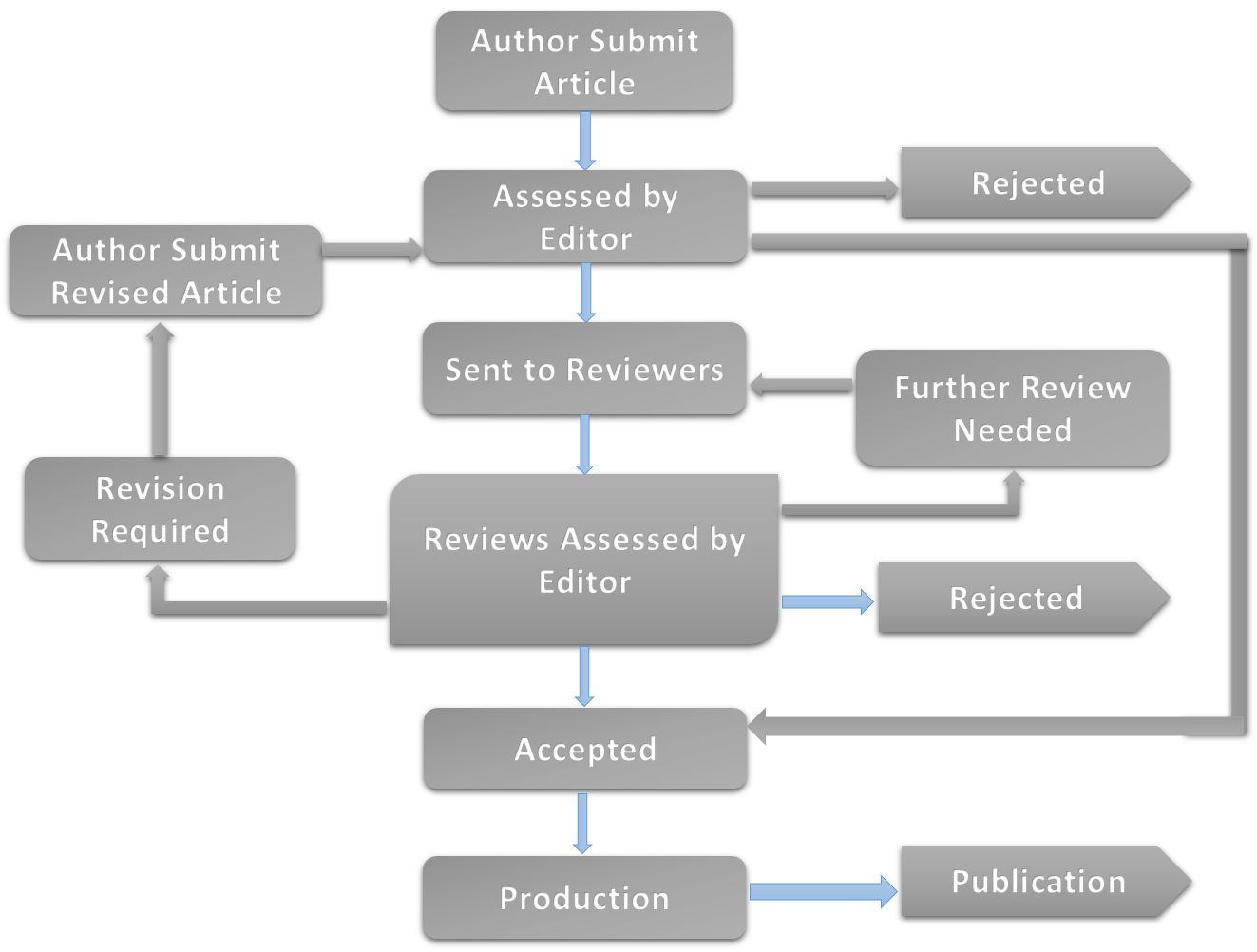
Editorial screening
Each submission is first checked by the editors for fit with the journal's scope, compliance with the Guide for Authors and originality, including a similarity check (see Plagiarism Policy). Manuscripts that do not pass this screening may be rejected without external review.
Double-blind review
Manuscripts that pass screening are sent to at least two reviewers who are experts in the field. Integra uses double-blind peer review: the identities of the authors and the reviewers are not disclosed to each other.
Decisions
The Editor-in-Chief decides which manuscripts are published, based on the validity of the work, its importance to researchers and readers, the reviewers' comments, and legal requirements concerning libel, copyright infringement and plagiarism. The Editor-in-Chief may consult other editors or reviewers in making this decision. Possible decisions are accept, minor revision, major revision and reject. Acceptance is never guaranteed.
Conference papers
If a manuscript is based on a conference or seminar paper that may have been published elsewhere, it must be substantially revised, expanded and rewritten so that it is significantly different from the paper or presentation on which it is based, and constitutes a new, original work.
Publication Ethics and Malpractice Statement
Integra and its editorial board follow the guidelines of the Committee on Publication Ethics (COPE) to ensure the integrity and quality of the publication process. The duties below apply to authors, editors, reviewers and the publisher.
Originality, authorship and copyright
Manuscripts submitted to Integra must be original works — full research articles, short communications or reviews written in English — that have not been published previously and are not under consideration elsewhere. All authors must have agreed to the submission, to the review process and to the order of their names on the title page, and must have agreed that the corresponding author may act on their behalf throughout review and publication. The corresponding author is responsible for obtaining this agreement. Published articles are distributed under the Creative Commons Attribution 4.0 International License (CC BY 4.0).
Duties of authors
- Reporting standards. Authors of original research should present an accurate account of the work performed and the results, followed by an objective discussion of their significance. The manuscript should contain sufficient detail and references to permit others to replicate the work. Review articles should be accurate, objective and comprehensive, and opinion or perspective pieces should be clearly identified as such. Fraudulent or knowingly inaccurate statements constitute unethical behaviour and are unacceptable.
- Data access and retention. Authors may be asked to provide the raw data of their study with the manuscript for editorial review, and should be prepared to make the data publicly available where practicable. Authors should keep such data accessible to other competent professionals for at least 10 years after publication (preferably in an institutional or subject repository), provided that participant confidentiality and legal rights over proprietary data allow it.
- Originality and plagiarism. Authors must submit only entirely original work and must appropriately cite the work and words of others, including publications that influenced the reported work. Plagiarism takes many forms, from passing off another's paper as one's own, to copying or paraphrasing substantial parts of another's paper without attribution, to claiming results of research conducted by others. Plagiarism in all its forms is unethical and unacceptable.
- Multiple, redundant or concurrent publication. Papers describing essentially the same research should not be published in more than one journal. Authors must not submit a manuscript that has already been published elsewhere, and must not submit the same manuscript to more than one journal at a time.
- Authorship. Only persons who (i) made significant contributions to the conception, design, execution, data acquisition or analysis/interpretation of the study, (ii) drafted the manuscript or revised it critically for important intellectual content, and (iii) have seen and approved the final version and agreed to its submission should be listed as authors. Others who contributed substantially (technical help, writing or editing assistance, general support) must be acknowledged, with their written permission, in the Acknowledgements section rather than listed as authors. The corresponding author must ensure that all appropriate co-authors, and no inappropriate ones, are included, and that all have approved the final version.
- Disclosure and conflicts of interest. At the earliest possible stage, authors must disclose any financial or personal relationships that could be construed to influence the results or their interpretation — for example employment, consultancies, stock ownership, honoraria, paid expert testimony, patent applications or registrations, grants or other funding, and non-financial relationships, affiliations or beliefs relevant to the subject. All sources of financial support must be disclosed, with grant numbers. If there are no conflicts of interest, state "Conflicts of interest: none".
- Acknowledgement of sources. Information obtained privately (in conversation, correspondence or discussion with third parties) must not be used or reported without explicit written permission from the source. Information obtained while providing confidential services, such as reviewing manuscripts or grant applications, must not be used without the explicit written permission of the authors concerned.
- Human participants and hazards. If the work involves human participants, animals, or chemicals, procedures or equipment with unusual hazards, the manuscript must say so, state that all procedures complied with relevant laws and institutional guidelines and were approved by the appropriate committee, and state that informed consent was obtained from human participants. The privacy rights of participants must always be respected.
- Participation in peer review. Authors must cooperate fully in the review process, responding promptly to the editors' requests for data, clarifications, proof of ethics approval and copyright permissions. When revisions are requested, authors should respond to the reviewers' comments point by point and resubmit by the deadline given.
- Errors in published work. Authors who discover a significant error or inaccuracy in their published work must promptly notify the editors and cooperate in correcting or retracting the article (see Corrections and Retractions).
Duties of editors
- Fair play and editorial independence. Editors evaluate manuscripts solely on their academic merit (importance, originality, validity, clarity) and relevance to the journal's scope, without regard to the authors' race, gender, sexual orientation, ethnic origin, citizenship, religious belief, political philosophy or institutional affiliation. Decisions to edit and publish are not determined by governments or any other agency outside the journal. The Editor-in-Chief has full authority over the editorial content of the journal and the timing of its publication.
- Confidentiality. Editors and editorial staff do not disclose information about a submitted manuscript to anyone other than the corresponding author, reviewers, potential reviewers, other editorial advisers and the publisher, as appropriate.
- Conflicts of interest. Editors do not use unpublished information from a submitted manuscript for their own research without the authors' explicit written consent. Editors recuse themselves from manuscripts in which they have a conflict of interest arising from competitive, collaborative or other relationships with any of the authors or connected institutions; another editor then handles the manuscript.
- Publication decisions. Editors ensure that every manuscript considered for publication is reviewed by at least two expert reviewers (see Peer Review Process).
Duties of reviewers
- Contribution to editorial decisions. Peer review assists editors in making decisions and, through editorial communication, helps authors improve their manuscripts. It is an essential part of scholarly communication, and Integra shares the view that all scholars who wish to contribute to science have an obligation to do a fair share of reviewing.
- Promptness. A reviewer who feels unqualified to review a manuscript, or knows that a prompt review will be impossible, should notify the editors immediately and decline the invitation so that other reviewers can be contacted.
- Confidentiality. Manuscripts received for review are confidential documents. They must not be shown to or discussed with others except as authorised by the Editor-in-Chief. This also applies to invited reviewers who decline.
- Standards of objectivity. Reviews should be objective, with observations formulated clearly and supported by arguments so that authors can use them to improve the manuscript. Personal criticism of the authors is inappropriate.
- Acknowledgement of sources. Reviewers should identify relevant published work not cited by the authors, and should notify the editors of any substantial similarity or overlap between the manuscript and any other published or unpublished work they know of.
- Conflicts of interest. A reviewer with a conflict of interest arising from competitive, collaborative or other relationships with any of the authors or connected institutions should notify the editors and decline the invitation. Unpublished material from a manuscript must not be used in the reviewer's own research without the authors' written consent, and privileged information obtained through review must be kept confidential.
Duties of the publisher
- Handling unethical publishing behaviour. In cases of alleged or proven scientific misconduct, fraudulent publication or plagiarism, the publisher, in close collaboration with the editors, takes all appropriate measures to clarify the situation and to amend the article concerned, including prompt publication of an erratum, a clarification or, in the most severe cases, a retraction. The publisher and editors take reasonable steps to identify and prevent the publication of papers where research misconduct has occurred, and never encourage or knowingly allow such misconduct.
- Access to journal content. The publisher is committed to the permanent availability and preservation of scholarly research and ensures accessibility by partnering with organizations and maintaining its own digital archive.
Plagiarism Policy
Integra does not accept plagiarism in any form. Every submitted manuscript is screened for similarity using Turnitin or iThenticate. The maximum similarity index accepted is below 20%.
Plagiarism is copying another person's text or ideas and passing them off as one's own. Copied text must be clearly delineated and its source cited. This applies to text, ideas, figures and figure legends, and tables and table legends, regardless of the source, of whether the source's authorship is known, of the type of document, of whether permission to copy was given, and of whether the copied work is the author's own (self-plagiarism). (Definition adapted from P. Cobbett, "Plagiarism: What It Is and How to Avoid It", 2016.)
Measures taken
When plagiarism is identified, the editorial board responsible for the manuscript agrees on measures according to its extent:
- Minor plagiarism — a short sentence or paragraph from another publication is copied without any significant data or idea. Action: the authors receive a warning and are asked to revise the manuscript and cite the original sources properly.
- Intermediate plagiarism — significant data, paragraphs or sentences are copied without proper citation. Action: the manuscript is rejected.
- Severe plagiarism — a large part of the article is copied, including original results (data, formulations, equations, statements), ideas or methods from other publications. Action: the manuscript is rejected and the authors are barred from submitting further manuscripts to Integra.
For self-plagiarism, reuse of between one-tenth and one-half of a previous paper is treated as intermediate; substantial reuse of the methods section of a previous paper is treated as minor. Authors who reuse their own published material to clarify new results must identify it, explain how the present work differs, and obtain permission to republish where the copyright holder requires it.
All authors are responsible for the content of their manuscript; any penalty applies equally to all of them. The editorial office keeps a record of penalised authors and checks new submissions against it.
Corrections and Retractions
Integra corrects the published record when necessary to maintain its integrity, following COPE guidance:
- Erratum / corrigendum — a correction of an error introduced by the journal (erratum) or by the authors (corrigendum) that does not affect the article's conclusions.
- Retraction — for articles with seriously unreliable results, plagiarism, duplicate publication or other misconduct.
Authors who find a significant error in their published article must notify the editors promptly. If the editors learn of an error from a third party, the authors must promptly correct or retract the article, or provide evidence that it is correct.
Copyright and Licensing
Integra is fully open access. Authors retain full copyright of their articles and grant the publisher a non-exclusive licence to publish, distribute and archive the work. All articles are published under the Creative Commons Attribution 4.0 International License (CC BY 4.0).
Under this licence, anyone — authors, readers and third parties — may copy and redistribute the article in any medium or format, and remix, transform and build upon it for any purpose, including commercially, provided that they:
- give appropriate credit to the authors;
- include the copyright and open access licence notice;
- provide a link to the CC BY 4.0 licence;
- indicate if changes were made.
These freedoms cannot be revoked as long as the licence terms are followed.
Self-archiving and reuse by authors
Authors may, without asking the publisher's permission:
- deposit and distribute the preprint, the accepted manuscript and the published version (PDF) of their article in institutional or subject repositories and on personal websites;
- use the article in teaching, conference presentations, internal training, and distribution to colleagues;
- include the article in a thesis or dissertation;
- reuse parts of the article in other scholarly works with proper acknowledgement.